Tag: blues guitar

  • Cleaning Your Guitar

    Cleaning Your Guitar

    How often do you clean your guitar?

    Good guitar maintenance is always a good thing, and cleaning is a part of it.

    You really want to keep off any oils or dirt that get on the guitar.

    Plus, it just looks better when it is clean! And yes, that even goes for the old, beat up models!

    Cloths

    I like to always keep a cloth in all of my guitar cases. A good microfiber kind works real well. Simply give the guitar a “wipe-down” when you take it out of the case. At the very least, wipe down the back and front of the guitar neck. Here are some good cloths you can use and they are all very inexpensive. Order them online or go get them at your favorite music store.

    https://www.sweetwater.com/store/detail/MN203–mus…

    https://www.sweetwater.com/store/detail/099-0524-0…

    Polish/Cleaners

    Cleaners that are also polishes work great! Except for the fretboards. I would offer extreme caution there. Why? It can add excessive wax that can affect the tone of your strings, not to mention it will get your fingers dirty!

    Here are some good polish/cleaners:

    I like this one a lot:

    https://www.sweetwater.com/store/detail/654–dunlo…

    This one I use on my acoustic:

    https://www.sweetwater.com/store/detail/18A0073–m…

    I have used this one too:

    https://www.sweetwater.com/store/detail/PolishPump…

    Really, just google what you need and choose one that looks good for you.

    Fretboard Cleaners

    For your fretboards you will use something that is wax free. Most brands use some kind of a lemon oil mixture. Regardless, make sure it is a fretboard cleaner and not just a guitar cleaner.

    Here are some examples:

    https://www.sweetwater.com/store/detail/MN105–mus…

    https://www.sweetwater.com/store/detail/6554–dunl…

    Cleaning Kits

    I prefer to grab guitar cleaning kits (in fact I need to get one soon). They are very inexpensive and are all in one. Some even have extra types of cleaners, like string cleaners, if you really want to go over the top.

    This is a very popular one from Dunlop:

    https://www.sweetwater.com/store/detail/6504–dunl…

    Another one from Nomad:

    https://www.sweetwater.com/store/detail/MN140–mus…

    I think you get the idea. Look for what might work best for your guitar.

    When do you clean?

    A good time is when you are changing strings. The guitar is for the most part bare and you have accessibility to all sections of the instrument. Make sure you have it available to use after the old strings are off and before the new ones go on.

    Of course you need to be changing your strings regularly, so there is that…

    And I will use the cleaner bottle more regularly on the guitar body and the back of the neck, especially when I have an upcoming performance. It simply makes everything look better.

    I hope this helps make you more successful in your playing!

    Rock On,

    Tony G.

    PS: Oh and hey, can you do me a favor? I’m starting a mission to grow my You Tube Subscriibers to more than 17 (Ha!). No, seriously, if you can quickly hop over there and “Subscribe”, it would be so very awesome!

    I promise that the videos (most of them at least) will be entertaining and/or informative!

    Here is the path to arrive there:

    Six String Corner

  • Guitar Lesson: How A Toothpick Saved My Guitar

    Guitar Lesson: How A Toothpick Saved My Guitar

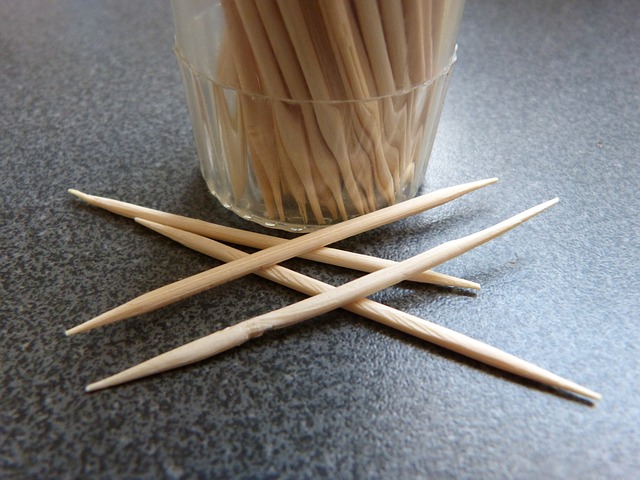
    My toothpick saved my guitar

    It’s amazing how some of the smallest things can have an impact on the bigger things

    I also learned a little more about resourcefulness

    The strap post on my Fender Stratocaster broke. That isn’t good when you need to put the strap on in order to play!

    One day this will happen to you. Just wait….

    The strap post was actually a strap lock. It literally locks the strap in place on your guitar.

    For a small investment, you should look into locks for your electric guitars – and even some of the acoustic guitars (just be aware of the acoustics that have the cord plug in where you put the strap, it doesn’t work for those models). I can’t tell you how many times the strap finds its way off the strap post at the most inopportune times (like a gig….)

    So, lucky you! I have a real short video to show you how it is done with a toothpick (thanks to my friend Greg who alerted me to what I found out was an old tried and true trick!)

    Yes folks, a toothpick.

    You have to see this to believe it

    Watch this, and bookmark it for when it happens to you :-)…

    Guitar Saved by a Toothpick

    Rock On,

    Tony G.

    PS: Oh and hey, can you do me a favor? I’m starting a mission to grow my You Tube Subscriibers to more than 16 (Ha!). No, seriously, if you can quickly hop over there and “Subscribe”, it would be so very awesome!

    I promise that the videos (most of them at least) will be entertaining and/or informative!

    Here is the path to arrive there:

    Six String Corner

  • Flying With A Guitar

    Flying With A Guitar

    Right now as I type this, where I live, it is the middle of April and it is snowing.

    Terrific.

    Time to start planning vacations to warmer climates

    Thinking of bringing your guitar?

    Thinking of flying to your destination…with your guitar?

    I have done it a number of times. I wanted to give you this short note on what to expect and the best way to travel with your guitar.

    First, if you own more than one guitar, try planning on taking the least expensive one.

    Why?

    In case something happens to it, you won’t be as sad.

    No travel is perfect but there are steps you can take to successfully get your guitar from point A to point B on a plane.

    Plan on bringing it as a carry on. Most airlines will let you carry it on board (sort of, I’ll explain below). However, checking it in presents all sorts of risks.

    Ever sit in a gate area and look outside to watch the baggage handlers throw all the luggage on to the conveyer belt into the plane? Yeah, I think you know what I’m talking about…

    That might be enough to convince you not to check them in. Even the most road worthy cases can be damaged, or worse, lost.

    Imagine that $1000 guitar you checked in arriving at your destination all torn up. This is a rare occurrence but I know people this has happened to.

    Or imagine it lost. Yep, that happens too.

    So plan on bringing it to the gate. Yes, it will get through security (just keep all those sharp objects at home. Hint: it won’t go good for you!)

    Also remember that it is considered a “carry on”. Keep that in mind if you have other bags or cases that you want to bring onboard. Airlines do have their limitations.

    Here is what my experience has told me about this process:

    When my turn is called to board, I simply bring my guitar with me. When I get to the plane entrance I always ask the flight attendant if there is room in their front closet. The closet is usually right in front where you walk in and is a place where the staff usually stores their own personal items. If there is room, they will almost always accommodate you. Many times they go out of their way to see if you can fit it in. It really is not a major hassle.

    I would say 80% of the time that is the case.

    There have been a handful of instances where it wasn’t a full flight and the attendant would tell me I can store it in the overhead bin.

    That has happened to me maybe 10% of the time (very few flights I have been on have not been full).

    If none of those options work out, you will have to do a check in on the ramp. Sometimes they will tell you before you ever get to the plane door while you are on the ramp. Other times, there is no room in the front closet and it is the only option left.

    There is always an airline staff person that will take your case and give you a check in ticket. Unfortunately, at this point you have no choice.

    And this is why I suggest not taking your most expensive guitar (if you have many). I have never had anything go wrong when I had to do this. Most of the time it will arrive at the baggage claim for you. There have also been a few times where we had a special location to get items that were checked in at the gate. Airline personnel will direct you where to go.

    If you only have one guitar, the odds are greatly in your favor that it will arrive with you to your destination. But, as in everything, there can be slight risks that I wanted you to be aware of.

    I hope this helps!

    And if you have any other suggestions that might have helped you, please let me know!

    Stay warm my friends!

  • How to Put Some “Nature” Into Your Music

    How to Put Some “Nature” Into Your Music

    I am about to tell you something you won’t expect:

    Stop Practicing! 

    Say what?

    Ok, not really, but now that I have your attention, let me explain about how and when we practice.

    It doesn’t matter whether you are a pro or are just starting out, this advice is for you.

    I think that we need to all pay attention to why we are practicing and what we are really trying to accomplish in our music.

    Let me explain by telling you a short story about a phase in my journey learning the guitar.

    I promise you it will make sense by the time you get to the end, so stay with me…

    Advice from the Pros

    I have many Guitar Player magazines that date back to the early eighties. I read them a lot back then. (Ok, now you have an idea how long I have been doing this!)

    Interestingly I don’t read as much of those articles now. I really should get back into it, there really is a lot of good stuff in that publication!

    I also learned a lot.

    Some of the contributing articles from so many of the guitar greats were my favorite reads!

    For example, I still use some of the warmup techniques that I read from an article by Paul Gilbert WAY back in the eighties!

    I’ll have to share that one some day soon!

    Also, Rik Emmett had a fantastic Back to Basics series where I still use many of his thoughts and ideas with many of my students today.

    But there was one article (1988) that had a big impact on me.

    Actually, it wasn’t really one of those monthly articles but rather an interview with Vernon Reid from the band, Living Colour.

    Before I talk about that, let me set up the reasons why it impacted me and why it should matter to you:

    80’s Overplay

    Whenever I listen to recordings of me back in the early days of my playing, especially in the early/mid eighties, I often times cringe!

    My playing in those days was all about playing fast and getting through as many notes as I possibly could, within the number of measures allotted, in the solo part of a song.

    It was kind of typical of the time though: the rising tide of the hair bands was entering the scene full force! I felt at that time that I needed to prove something (how many can relate?).

    I wanted to be the big star and impress everyone, not just the girls!

    So, I taught myself many of the scales (pentatonic, major, minor) by either reading music books or simply listening to a record over and over again to grab an impressive solo (how many remember going back and forth with the turntable needle trying to get that guitar part right?). And then I would sit in my room and practice them over and over and over…

    I was actually quite proficient at it.

    The problem was that it didn’t have a lot of soul to it. Hence, the reason I cringe when I listen to some of those old recordings now.

    I can’t tell you how many times I wish I could find a flux capacitor and reach back into time to tell that 20-something kid to SLOW DOWN!

    Middle of the Road on Speed

    One of my “classics” was when I was in a band back in 1984 called Slipp Kidd (and no, we didn’t play any Who music. Yeah, real creative..).

    The song was Middle of the Road by the Pretenders.

    Take a listen if you never heard it. Check out the solos in particular. I can listen to it now and really appreciate the coolness of how he played it. Great sound and really fit the vibe of the song.

    But the “me” back in 1984 would have none of it! Oh no, it was lame and didn’t have any pizazz! So I was going to “improve” on it and really show ’em how it’s done!

    I proceeded to play the solo part with fast scales, dive bombs, guitar tricks, you name it.

    Now, if we were going to do a heavy metal remake of the song, that’s one thing. But we weren’t doing that. We were simply a cover band rocking the song out at a club called Haywires in the Chicago suburb of Burbank (long gone, I think it’s a grocery store now or something).

    Wanna hear it? Oh yeah, I have the recording (my apologies to former members! lol)! It was made from someone’s tape player in the back of the room.

    Give it some grace though, EVERYONE in this band did get much better over the years! My guitar solo was really, well, over played to say the least! Listen with care: Middle of the Road – Slipp Kidd.

    Slowing Down in the Moment

    A few years later I ended up doing a number of recordings with a friend who really could write great jingles.

    We would get together with a few other musicians and just create music that was catchy. There were a lot of overnight sessions where we would record all of this material on his 4 track.

    I’m not sure exactly where he ended up but it wouldn’t surprise me if he wrote some jingles you have heard. I can’t find the recordings now, but I can say what it did for me was to work within the song. I really got more into the melody and playing the guitar parts with feeling.

    Bottom line: I was creating music. It was a true eye opener. I loved listening to some of those songs we did.

    And, in bands that followed, I could hear a distinct change in how I played.

    One of my favorites was this original song from 1988 called Falling. It is definitely dated in it’s sound, but I was real happy with how my playing got into the moment of the song (can you also hear my “late 80’s Alex Lifeson”, Rush influence in the music?).

    Gotta love the mullet in the video!

    Get Out in the Real World

    Don’t get me wrong, I still was playing fast and continuing to discover some great guitar riffs.

    What I did learn (and still learning to this day) was to find the right place to play fast, if and when it is needed.

    So around that time in 1988 I came across that Vernon Reid interview in Guitar Player. I wish I could find the entire interview, it was such a great read.

    There was one part of that interview that always stuck with me. I think he was asked some technical question regarding practicing and scales, I’m not sure.

    His answer was interesting and very impactful: There are so many players out there that feel it is necessary to sit in their rooms for hours on end learning and practicing scales and trying to figure out all the latest and greatest guitar tricks.

    Look, those things are important. But they are all just notes within a greater part of the story.

    In order to make music: stuff that people can relate to, can get emotionally involved with, can truly appreciate, and be a well rounded, true musician, you need to put that guitar down and get the heck out of the room!

    Get out in the world: hang out with friend, go for a hike or a walk, hike a mountain (ok, that’s my thing), play with your kids.

    SEE and EXPERIENCE the world you live in!

    It is from there where your true music will come from and will simply make you a better player. Otherwise you are no different than a robot, you’re just playing the notes with no meaning behind them.

    Find Your Artist Within

    It’s something I try to instill in my students and even fellow musicians.

    I am still sometimes guilty of overplaying and getting out of the feel of the music.

    But, at least I am aware of that shortcoming and continue to find ways to play better. Live and experience the world around you.

    The riffs will come.

    In fact, they will at times be better than you ever thought possible.

    Until the next time, rock on!

    One More Thing…

    Oh and hey, can you do me a favor? I’m starting a mission to grow my You Tube Subscriibers to more than 15 (Ha!). No, seriously, if you can quickly hop over there and “Subscribe”, it would be so very awesome!

    I promise that the videos (most of them at least) will be entertaining and informative!

    Here is the path to arrive there:

    Six String Corner
     

  • Guitar Pick “Preservation”

    Guitar Pick “Preservation”

    Guitar picks can be like socks.

    Whatever happens to that other sock after we do the laundry?

    Drives me nuts. I sometimes think that they simply fall into a black hole, never to return until the end of time.

    I firmly believe that guitar picks have their own black hole that they fall into as well

    I know that because I don’t always remember throwing them out or tossing them away…they simply vanish

    So to “combat” that phenomenon, I hold on to a certain group of picks and keep them in a safe place (or in the strings of my guitar!)

    And I use them over and over

    But the inevitable problem with guitar picks is that they eventually wear out. And then you have to buy new ones, half of which will join the other socks in their own black hole

    However, there is a trick, a trade secret if you will, that will preserve your guitar picks just a little longer. It is really simple.

    It’s called the “Rug Rub”

    Rug Rub

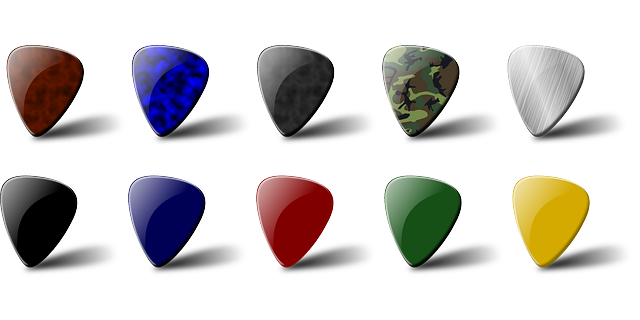
    The success of this technique is dependent on the type of pick you use. I use Tortex picks, they are the best to do this with (I usually order via Musiciansfriend.com but you can get them at most any music store). They come in all shapes sizes. This is the one I use for my electric guitars:

    When you see wear on the sides of your pick, you find a rug made with a coarse material (like an indoor/outdoor type, or most types you would see on a stage if you gig a lot, even a lot of those welcome mats can work). And then simply rub the sides of the pick on the carpet surface to smooth it out. 

    Do it like this:

    That’s it. (Side note: I learned this from a drummer friend of mine some time ago! How about that!).

    There will come a time where you will have “filed” enough that the shape of the pick gets deformed to point where it’s hard to play.

    But the good news is that your single pick will last a whole lot longer! I usually will order a half dozen of the Tortex picks and, as long as they don’t fall into their black hole, I typically won’t place another order for as long as 6 months.

    You can use many types of picks. Some would be more difficult than others.

    For example, the more plastic type picks that Fender uses (the traditional kind that they have used for a long time) would take a little longer in the filing process. Sometimes they can wear so much that you can’t do anything with them.

    There are other types of picks, such as those made out of bone, where this doesn’t work nearly as well. However, the nature of their construction allows them to last long on their own.

    If you haven’t done so yet, try different types of picks of different material and thickness to see what works for you. Let me know if their is more you wish to learn about picks. Just reply back or leave a comment!

    Rock on till the next time!

  • Barre Chord Basics – Part 2

    Barre Chord Basics – Part 2

    Knowledge of barre chords can be one of your greatest assets as a guitar player

    That’s what I said last week.

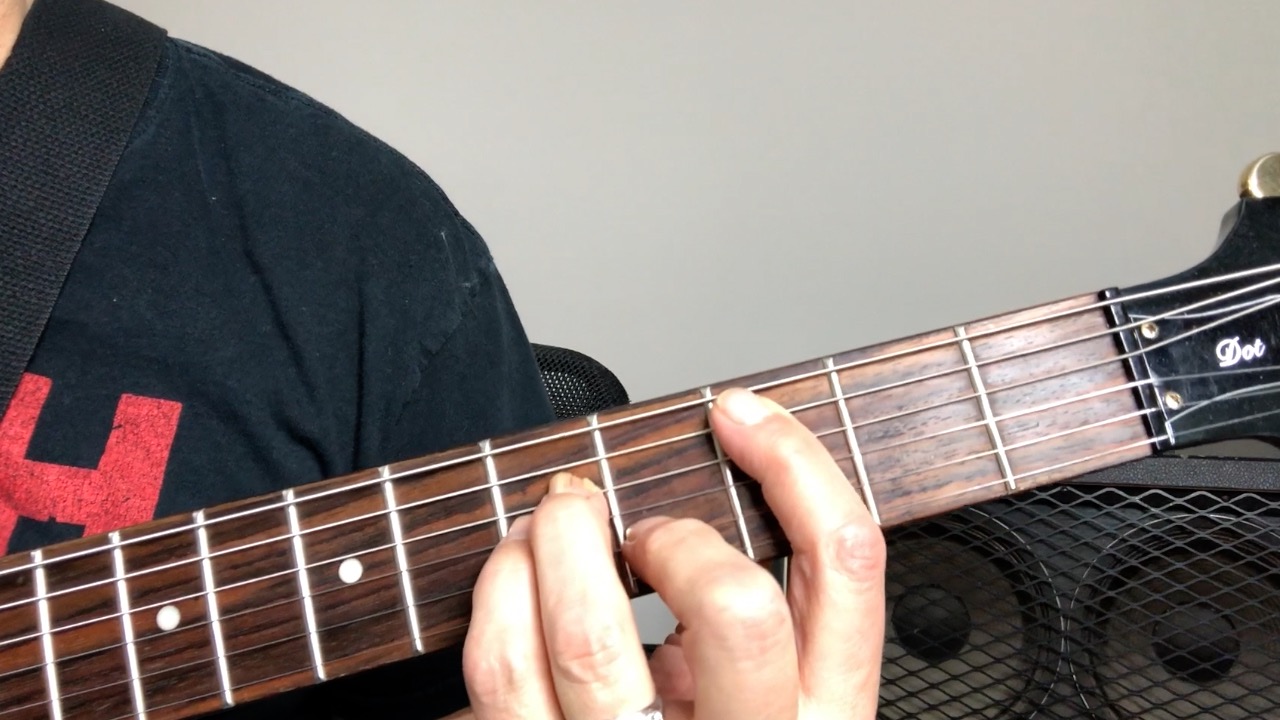
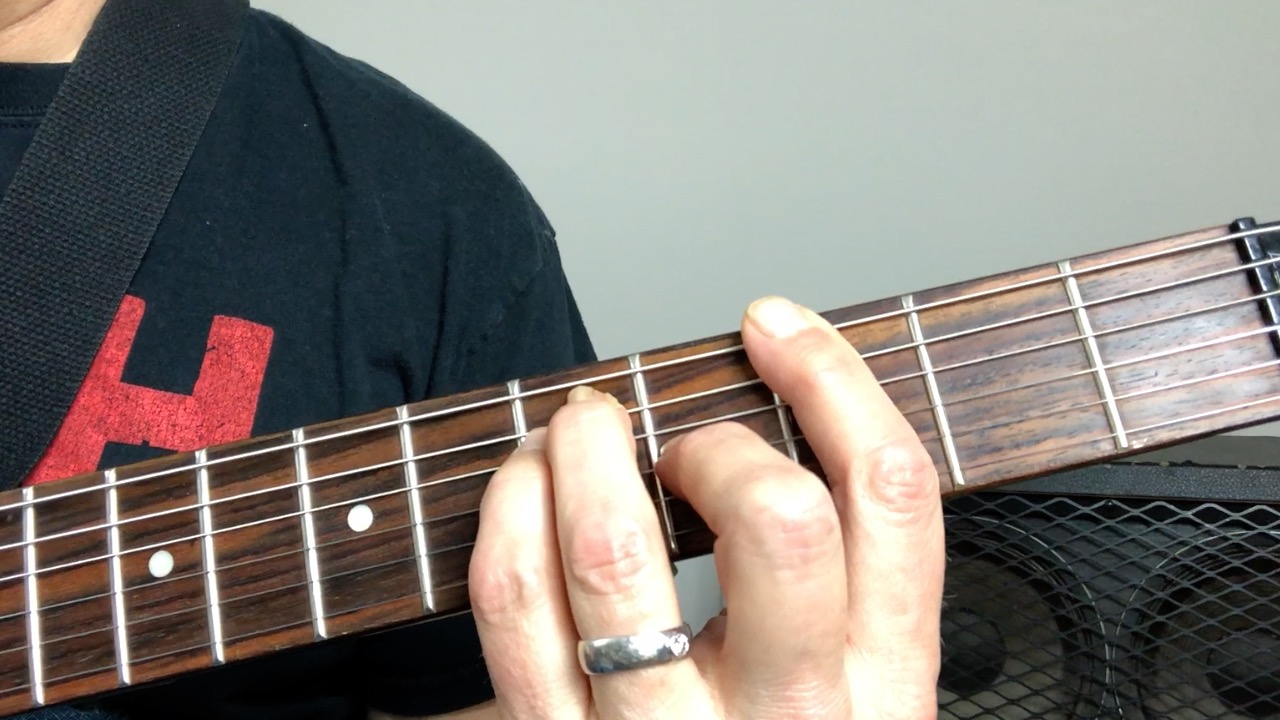
    I wanted you to first look at how well you are playing the four basic shapes like this:

    From those four shapes you can play virtually any 7 and 9 chord. You can also play chords that also have the ‘2’, ‘sus’, 11, and stuff like ‘add 13’ tagged on to the chord name.

    So what is the trick?

    It is simply taking a finger away, or moving it to another location.

    Here is a video I made for you all to demonstrate how it is done:

    See how easy it is?

    I mentioned in that video about making a .pdf file to accompany it – that will be coming up! I wanted to at least get this information to you all right now. You will be the first to get that .pdf file. Stay tuned!

  • Barre Chord Basics – Part 1

    Barre Chord Basics – Part 1

    Knowledge of barre chords can be one of your greatest assets as a guitar player

    Barre chords also strike fear into many beginning and intermediate players

    Barre chords can help increase your “knowledge” of countless chords – some with some crazy names

    Here is a test: how quickly can you play an Ab13 without looking it up?

    How about a Bbmaj9?

    Or a Gbm7?

    I know some of you can but I bet most can’t do it without having to look it up.

    If you play guitar for any length of time, you WILL encounter a time where you have to play “that dreaded chord” on the spot!

    I consider myself primarily a rock/pop guitar player (and yes, I include blues and country in that mix)

    But I am not a jazz player. I am really a rock player who can play jazz.

    That means I can sit in on a jam with jazzers and probably be fine with the “crazy chords” that inevitably come up. I’ve done this many times before.

    Why?

    Well, one of the secrets is knowing my barre chords.

    Yes, those evil, nasty barre chords can be your greatest asset as a player!

    So how does it work?

    Before I get to that you need to be sure you have your barre chords down and sounding great!

    If you already have them down, skip ahead. If not, this week I want you to focus on these FOUR barre chord shapes.

    Major Barre Chord (root note on 5th string)

    Major Barre Chord (root note on 6th string)

    Minor Barre Chord (root note on 5th string)

    Minor Barre Chord (root note on 6th string)

    Get these four down – or least have an understanding of the shapes.

    Next week I am going to show you how, by just a few simple changes to one of the primary four shapes, you can take on many of those “strange” chords you come across!

    If you need help on how to play these chords, reply back and let me know.

    Talk to you next week!